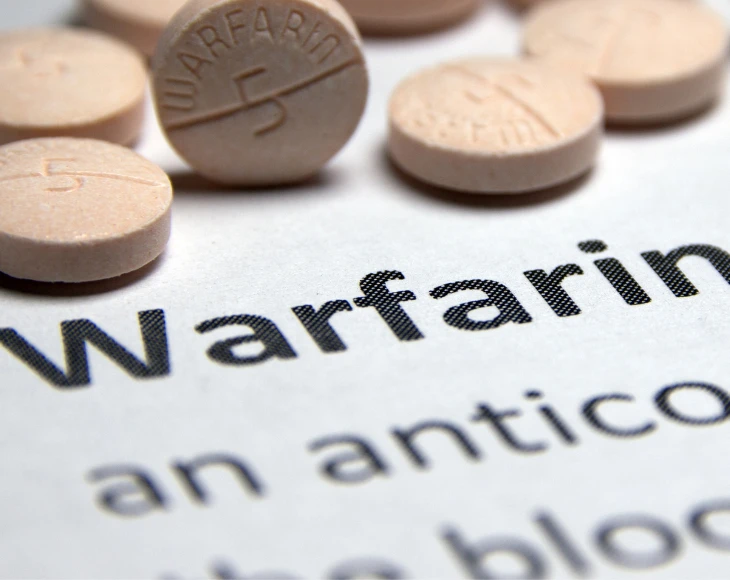
Anticoagulants are a commonly prescribed class of medication that paramedics encounter in their day-to-day work. Warfarin has been used as an anticoagulant since the mid 1950s and despite the rise of newer direct oral anticoagulants (DOACs), warfarin is still used today in the management of specific conditions. Patients on warfarin require ongoing testing to ensure their international normalised ratio (INR) levels are within the therapeutic range and they often share results with paramedics.
In this course, we review how to include results in the clinical assessment, the pharmacokinetics of warfarin, compare warfarin with newer DOACs, and explain which medication is preferred in different conditions. We explain what an INR is, how it's measured, and what foods, medications, and supplements can affect it.
By the end of this microlearning, you should be able to:
NOT STARTED: You have not yet started this course/module.
Click the button below to start the course/module. Please note that once you start, you will not be able to save your progress. If you need to exit the course/module before you finish, take note of the page you are on so you can easily return to it later.

The College is the peak professional body representing and supporting paramedics and student paramedics across Australia and Aotearoa New Zealand since 1973.
The College acknowledges Aboriginal and Torres Strait Islander peoples as the traditional custodians of the land and sea in which we live and work, we recognise their continuing connection to land, sea and culture and pay our respects to Elders past, present and future.
We recognise the unique role of Māori as Tangata Whenua and embrace Te Tiriti o Waitangi, recognising Māori as tino rangatiratanga of Aotearoa New Zealand while supporting the guiding principles of Te Tiriti – Tino rangatiratanga, Equality, Active protection, Options, and Partnership.
